
Motor starting & supply conversion
Starting-current management and voltage conversion solve different problems. Determine whether the load needs ramped starting, continuous speed control or a different supply configuration.
Load characteristics & existing operating problems
Limited supply capacity, motor starting shock and incompatible equipment voltage are distinct issues. Heavy loads may need substantial breakaway torque, while reduced starting voltage affects available torque; repeated starts accumulate heat. Establish fixed- versus variable-speed duty and the actual supply phase arrangement before choosing soft starting, variable-frequency control or voltage conversion.
- Verified supply
- protection / isolation
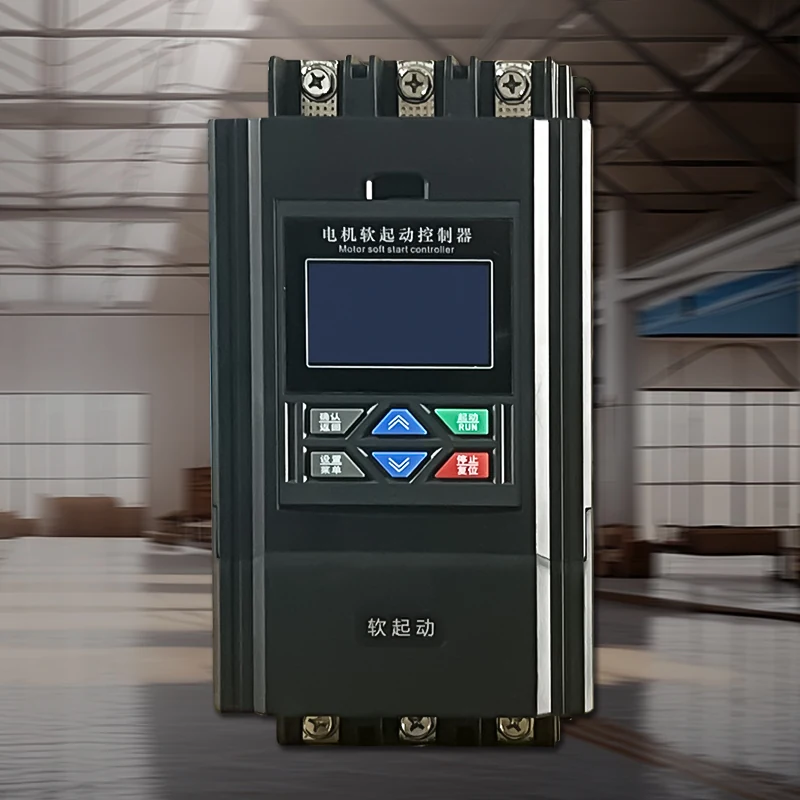 Hailing softstarterspecified starter or converter
- matched motor and load
System composition & control sequence
A starting arrangement needs protection, isolation, permissions and fault handling, not merely an inserted device between supply and motor. Confirm starter bypass, transfer timing and stopping method against the actual model. For voltage conversion, verify input/output phases, rated current and permitted load; a 220-to-380 label does not establish suitability for every three-phase machine.
Selection inputs & control requirements
Collect supply phase/voltage, prospective fault current, motor current, starting torque, starts per hour and bypass requirements. Verify converter input/output phase arrangement rather than assuming a 220-to-380 label describes every configuration.
| Data to collect | Why it matters | Reference |
|---|---|---|
| Supply voltage, phases and capacity | Separate supply incompatibility from starting voltage drop to avoid the wrong equipment class. | Site supply records and distribution design. |
| Motor rated current and load | Assess starting torque, duty and capacity margin. | Nameplate and machine data; request an actual current table where the overview lacks one. |
| Starts per hour and operating mode | Repeated-start heating and continuous-speed requirements influence equipment choice. | Project cycle records; a starter does not supply continuous speed control. |
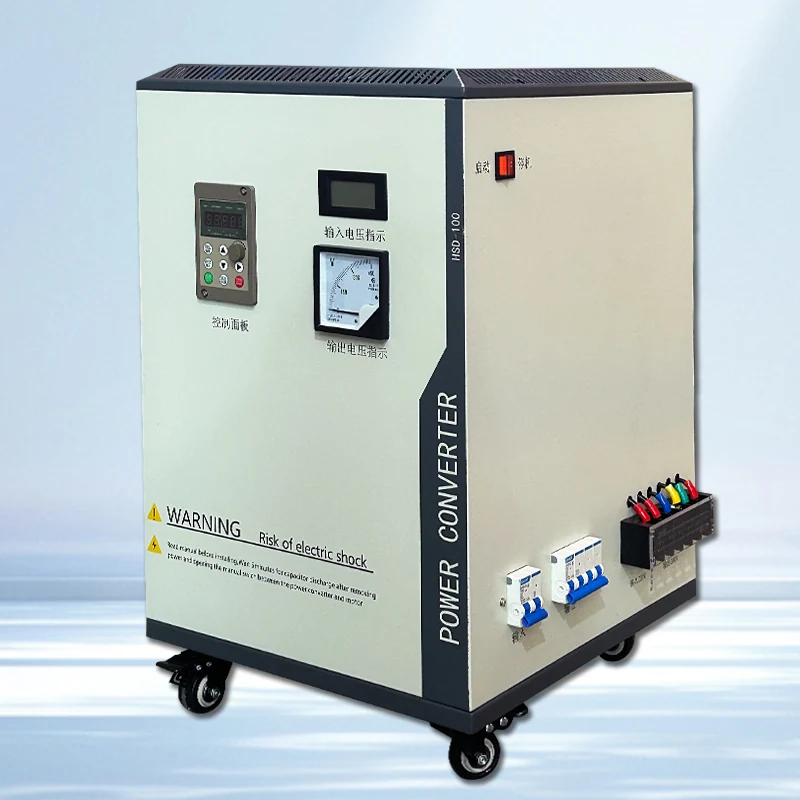
| Bypass, isolation and conversion | Check output use and switching logic to prevent backfeed or conflicting supplies. | Ordered-model documents required for HSD-100/5000 and the starter. |
Capability and safety boundaries
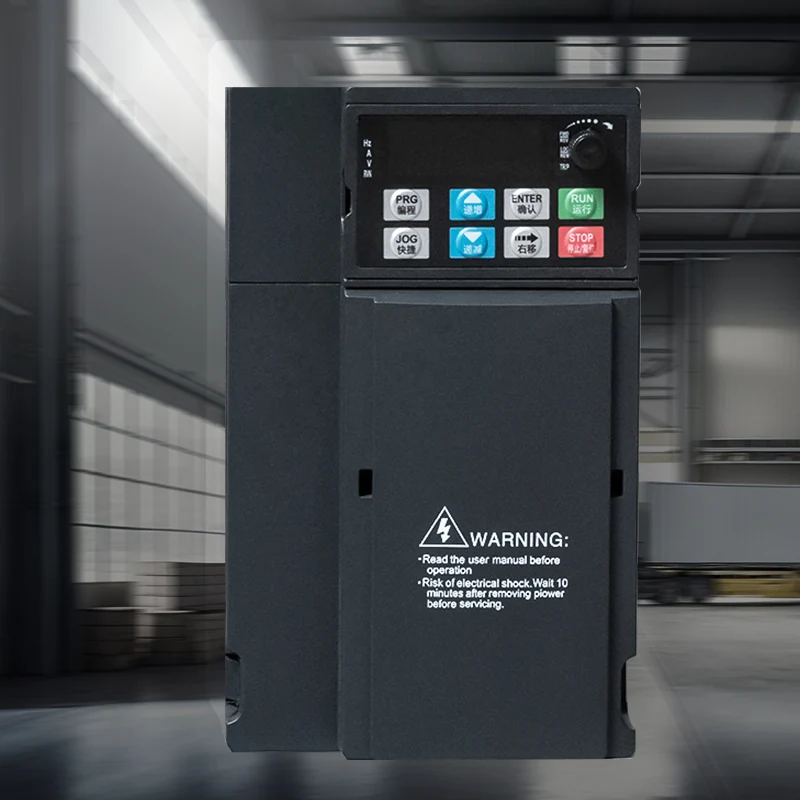
A soft starter is not a frequency inverter or voltage transformer. HSD-100 and 5000 overview images do not justify an invented current table or guaranteed capacity.
Application scenario / design example
APPLICATION SCENARIO / SELECTION EXAMPLEAssume a factory has two independent needs: a fixed-speed pump with starting shock and another machine with an incompatible supply voltage. Collect load, start-cycle and supply data separately. For the pump, verify that soft starting still permits the required acceleration. For the second machine, check converter phases, current and output suitability. Trial each independently and record temperature and output. A successful brief spin does not replace specification verification, and a starter is not sold as a frequency inverter.
Commissioning & acceptance checks
Check starting time/current, motor heating, bypass/interlock sequence and measured output under the agreed load.
- Verify supply, motor nameplate, protection settings and isolation, preserve original wiring/operating records, and have qualified personnel check phases and intended output use.
- Use the manufacturer’s controlled-start procedure and record current, voltage drop, acceleration and temperature. Minimizing current is not acceptable if the motor cannot accelerate promptly.
- Repeat at agreed load and start duty, checking bypass, fault and recovery logic. Record loaded converter output; no-load voltage alone does not verify capacity.
Assessing energy and operating value
Starting improvements primarily concern current shock, voltage drop, successful acceleration and thermal condition; they do not automatically save running energy. Conversion assessments include losses at the same machine duty. Compare fixed-speed soft-start operation over full cycles rather than applying variable-speed pumping formulas.
Product selection & documents
Start with these product families, then match the exact motor, supply, control interface and operating duty.