

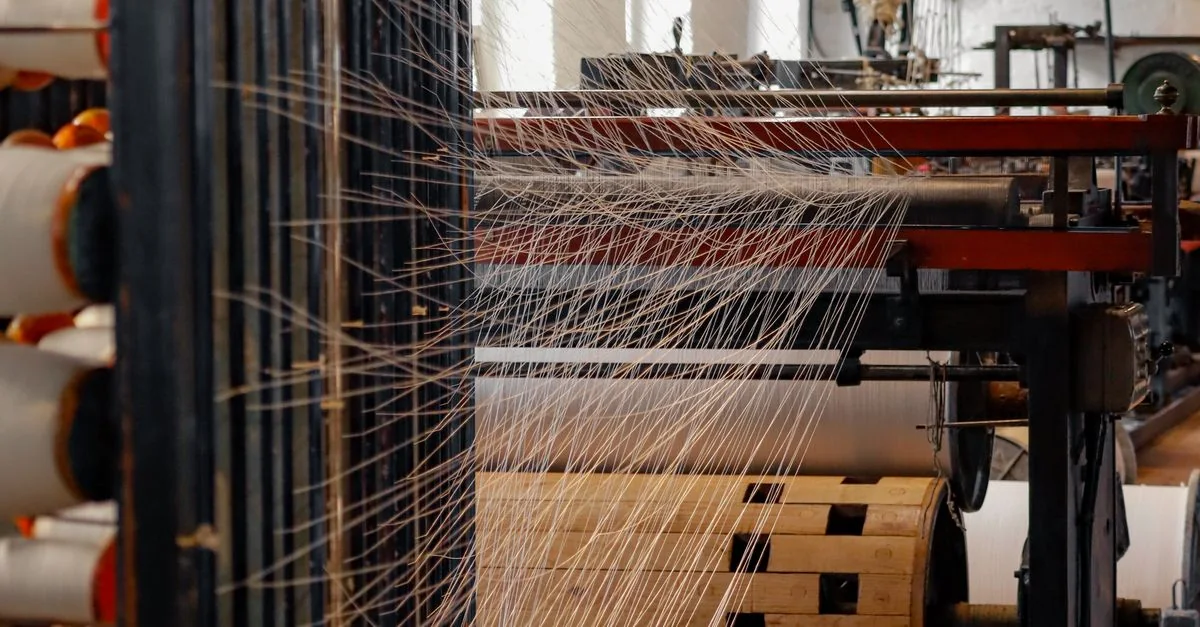
Textile machinery & process auxiliaries
Textile production needs repeatable motor speeds and stable auxiliaries. Winding tension and multi-axis synchronization cannot be inferred from general speed control.
Load characteristics & existing operating problems
Drafting, twisting, winding and ventilation have different duties; a single speed figure cannot describe a textile line. Speed changes can affect tension and yarn breaks, while lint obstructs cooling. Separate ordinary process motors, tension-sensitive axes and workshop auxiliaries, identifying which must remain coordinated by the machine’s dedicated controls.
- Machine controller
- verified speed reference / communication
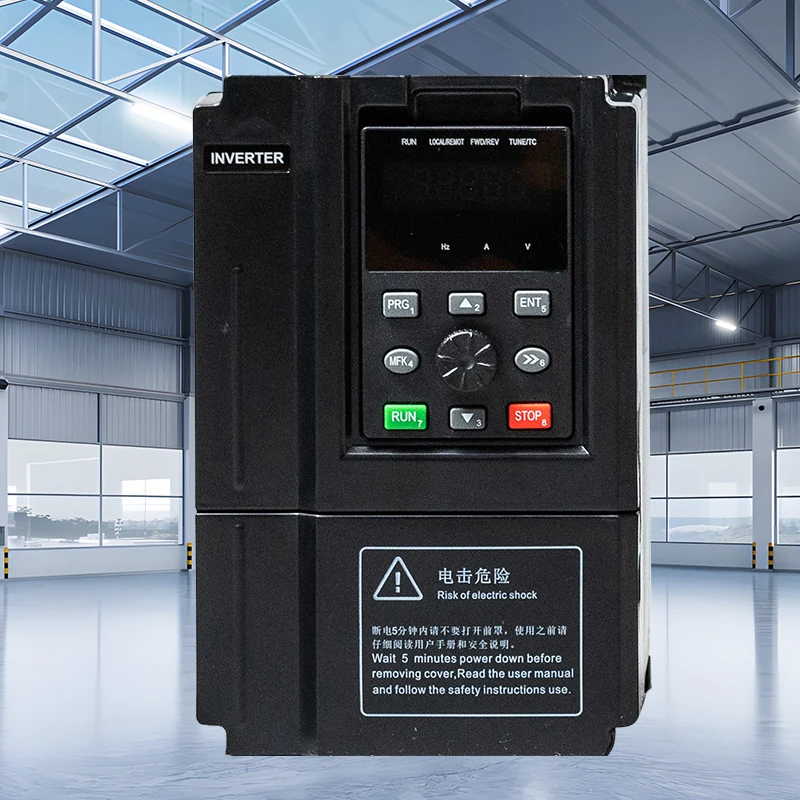 Hailing 750drive
- compatible process motor
System composition & control sequence
The existing machine controller manages recipes and sequencing, and drives follow verified speed references. Machine-level logic defines how yarn breakage or downstream stopping propagates upstream; the presence of serial communication does not establish synchronous stopping. Cabinet filtration, cleaning and temperature monitoring must suit lint conditions, and maintenance must prevent cleaning dust from entering energized equipment.
Selection inputs & control requirements
Identify the exact process, motor, inertia, speed profile and dust/lint conditions. Confirm communication timing and torque requirements. Filtered cabinet ventilation must maintain the drive’s permitted temperature.
| Data to collect | Why it matters | Reference |
|---|---|---|
| Process and speed profile | Identify drafting, winding, ventilation and other loads to establish the actual control objective. | Machine process data; general speed control does not establish tension control. |
| Inertia and load torque | Assess current and deceleration energy during starting, stopping and roll changes. | Motor/mechanical data and exact drive overload/braking specifications required. |
| Yarn-break signal and stop interlock | Prevent a local stop causing wrapping, yarn breaks or material accumulation. | Inspect original PLC logic, terminals and communication timing on site. |
| Lint, temperature and cabinet | Determine filtration, cooling and access to reduce blocked-ventilation risk. | 750/3000/790 material identifies candidates, not certification of the entire machine environment. |
Capability and safety boundaries
Electronic gearing, precision tension loops, permanent-magnet motor control and common-DC-bus multi-drive architecture require series-specific confirmation.
Application scenario / design example
APPLICATION SCENARIO / SELECTION EXAMPLEAssume a textile workshop wants to adjust ventilation and a conventional feed motor while its critical winding axis retains the dedicated system. Record permitted process speeds and interlocks before verifying motor and drive interfaces. Feeding follows a verified reference, and the machine controller handles yarn-break stopping using its established sequence. Ventilation is adjusted independently. Trial records separate yarn condition, accumulation, cabinet temperature and energy; a general-drive change is not described as a complete electronic-drafting upgrade.
Commissioning & acceptance checks
Compare commanded and measured speed, check lint accumulation, motor temperature and process consistency through acceleration.
- Preserve recipes and motor settings, inspect transmission, lint accumulation and cabinet filters, and confirm machine permissions and manual-reset logic.
- Run permitted speed stages, recording actual speed, current, temperature and product condition. The machine specialist evaluates any tension-sensitive or multi-axis changes.
- Verify machine responses to yarn breakage, downstream stop and power restoration, checking for uncontrolled material wrapping. Recheck cabinet temperature and filter servicing over a representative shift.
Assessing energy and operating value
Compare energy per accepted output at the same product, linear density, shift and quality level, recording breaks, waste and downtime. Analyze ventilation separately by useful airflow. Lower electricity caused by reduced production speed is not evidence of increased productivity or whole-line efficiency.
Product selection & documents
Start with these product families, then match the exact motor, supply, control interface and operating duty.
HL750 Series Frequency Inverters
Industrial Motor Drives
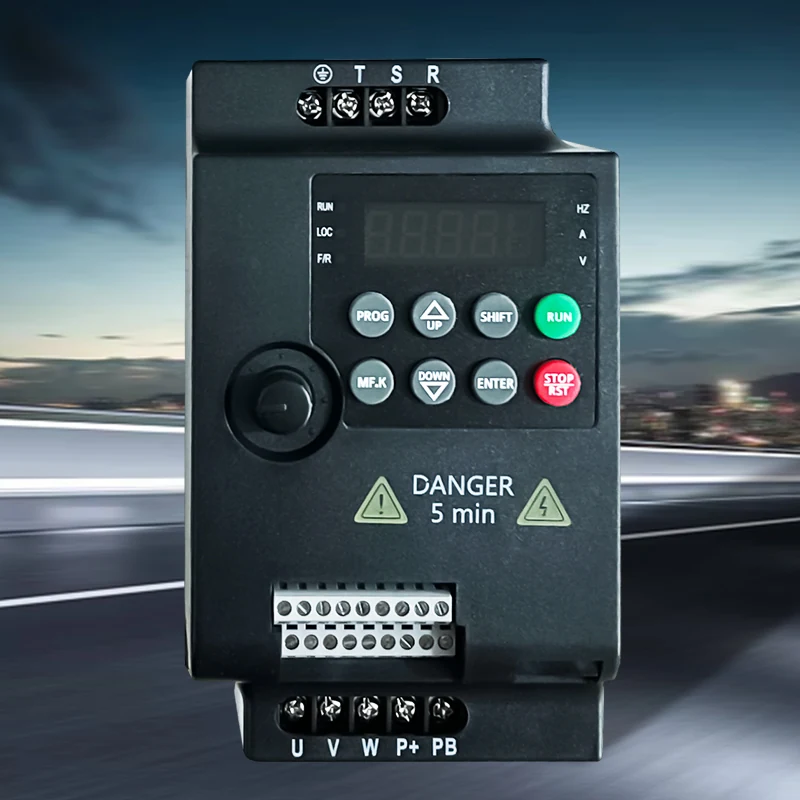
3000 Series Frequency Inverters
Industrial Motor Drives
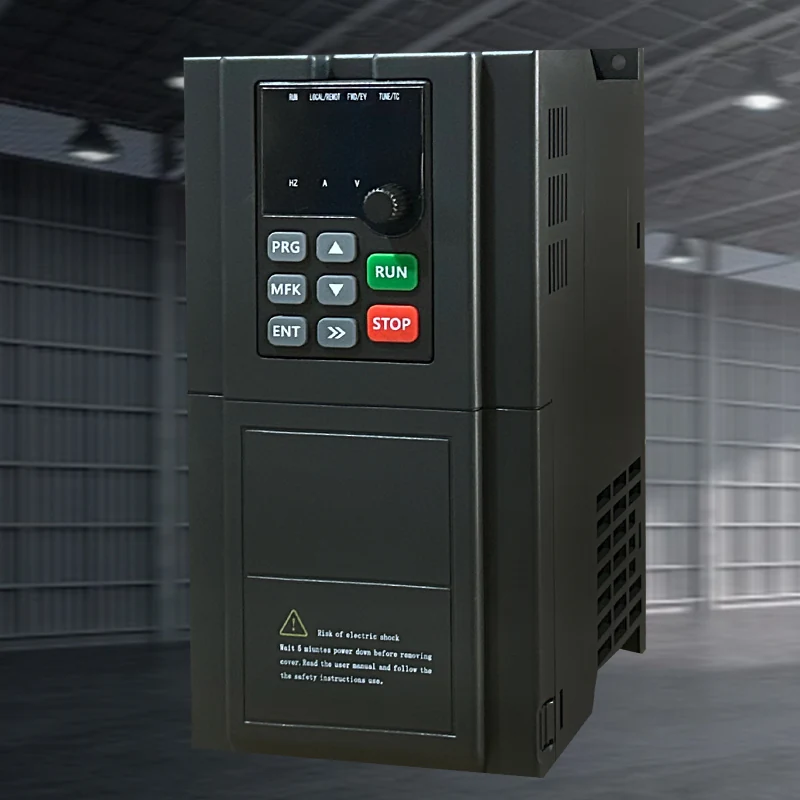
790 Series Frequency Inverters
Industrial Motor Drives
General motor-control references
High-performance vector drive — general reference manual
Technical reference: match the equipment manual and control-firmware revision before applying terminal or parameter identifiers.
Permanent-magnet motor wiring & parameter setup note
Technical reference: match the equipment manual and control-firmware revision before applying terminal or parameter identifiers.