


Off-grid solar & battery backup
Solar yield, battery autonomy and peak AC load must be sized together. The printed series number is not necessarily the continuous AC output rating.

Load characteristics & existing operating problems
An off-grid system must meet continuous load, transient starting and autonomy requirements together. Motor, pump and compressor starts cannot be assessed by adding average nameplate power alone; battery voltage and temperature also affect available output. Separate essential, deferrable and unsuitable high-inrush loads rather than reading system capability from the series number.
- PV strings and protected battery
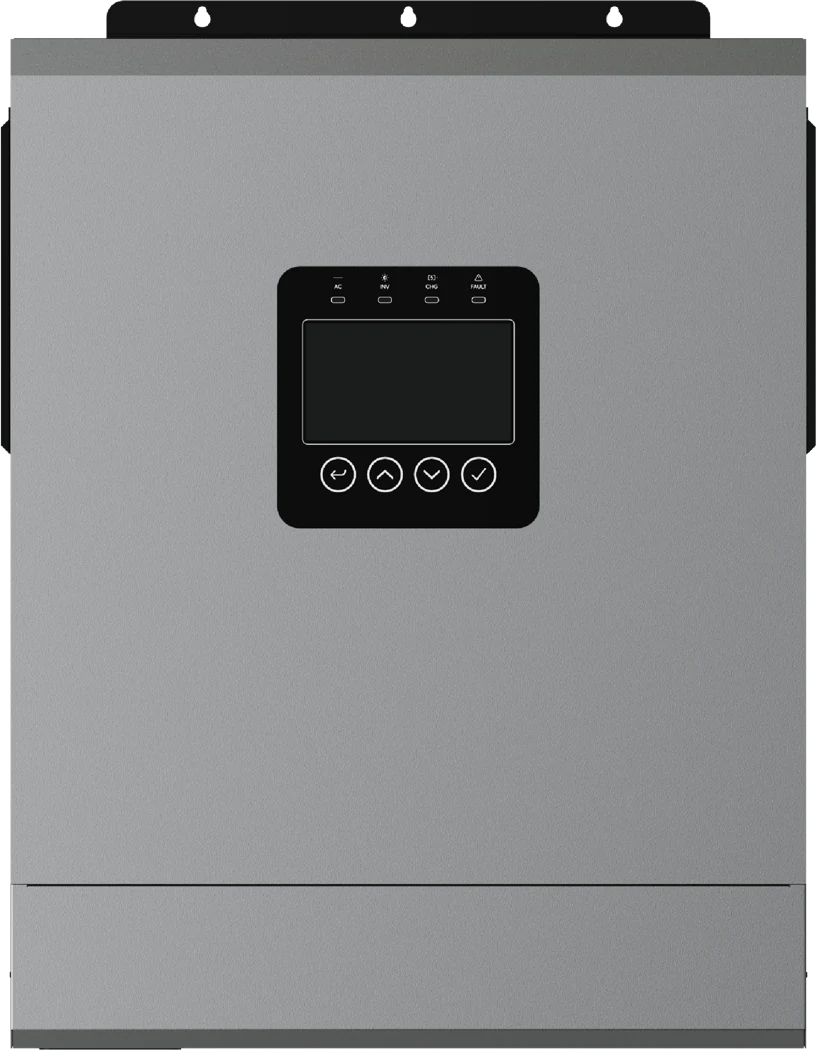 Hailing PV15000-48 P12.0matching inverter/charger
- isolated backed-up AC load circuits
System composition & control sequence
The system comprises matched PV strings, a protected battery, inverter/charger and isolated backed-up circuits. Configure charge/discharge and AC transfer against exact-model documents and verify battery-management communication compatibility. Parallel P12 use requires its designated hardware; treat S12 independently. Grid export is outside this concept, and load circuits must not backfeed the public network through an improvised arrangement.
Selection inputs & control requirements
List continuous and surge loads, autonomy, battery voltage/current, AC voltage and cold-weather PV Voc. Apply battery-only derating: PV3000 S2.0 is limited to 1560W at12V; PV9000 S5.0 to4000W at25V; P12/S12 to10kW at50V as documented.
| Data to collect | Why it matters | Reference |
|---|---|---|
| Continuous and surge loads | Distinguish simultaneous operation from motor starting and define essential circuits. | Site load records and equipment requirements; transient compatibility must be verified. |
| Battery voltage, capacity and current | Assess usable energy, autonomy and protection; Ah is not directly equivalent to kWh. | Exact inverter table and battery-maker charge/discharge conditions. |
| String Voc and MPPT conditions | Check cold voltage ceiling, hot operating voltage and each input arrangement. | Exact PV-model documents; never mix limits between families. |
| AC voltage, configuration and derating | Distinguish low-voltage AC versions, P/S configurations and battery-only limits. | Preserved model-specific sources; P6.5 uses its own nameplate, not a12kW manual. |
Capability and safety boundaries
P12 parallel operation requires the specified parallel hardware; S12 must not inherit it. The S4.0 LV is a110/120V variant, not a general230V unit.
Application scenario / design example
APPLICATION SCENARIO / SELECTION EXAMPLEAssume a small office wants backup for lighting, networking and selected outlets, excluding large motors. Record essential daily consumption and outage periods, then size capacity from usable battery energy and the selected model’s battery-only derating. Match PV strings for cold voltage and MPPT operation and maintain engineered isolation from the public grid. Trials cover load steps and the required backup period, checking output and battery current. Added air conditioning or parallel operation requires a new selection rather than inheriting the original conclusion.
Commissioning & acceptance checks
Test load steps, battery-only power limits, transfer behavior, earthing/protection and monitored battery current without feeding the public grid.
- Verify earthing, isolation, protective devices and battery polarity, then check PV and battery voltages using manufacturer procedures. Never determine polarity or compatibility by live trial connection.
- Progress from small to agreed loads while checking output, battery current and temperature. Test PV-assisted and battery-only modes separately and observe voltage-specific derating.
- Safely verify transfer, low-energy response and recovery, recording essential-circuit performance. Parallel installations require their own documented verification; a single-unit pass is insufficient.
Assessing energy and operating value
Record PV input, AC input, battery charging/discharging and useful load energy separately at equivalent service. Battery cycling incurs losses; do not count both charged and discharged energy as separate benefits. Evaluate backup value by fulfilled service, while bill savings additionally require actual tariffs and operating strategy, not installed power alone.
Product selection & documents
Start with these product families, then match the exact motor, supply, control interface and operating duty.
PV15000-48 P12.0 Solar Inverter
Solar Inverters & Solar Pump Drives
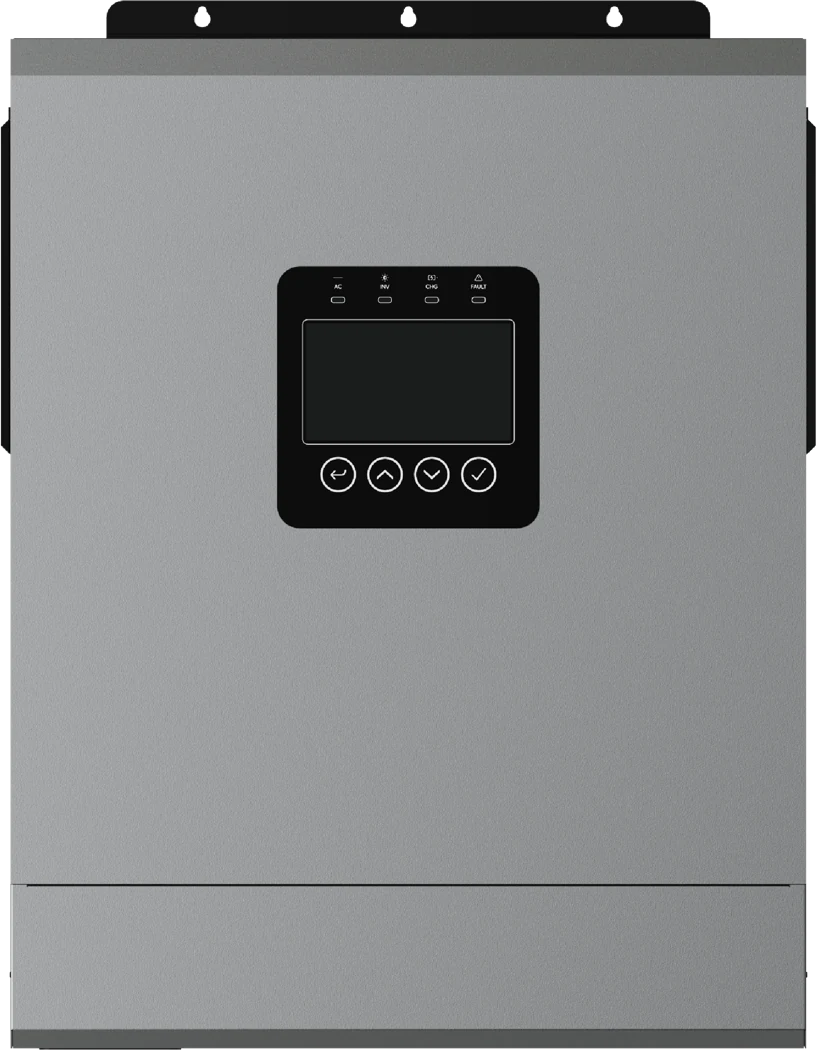
PV15000-48 S12.0 Solar Inverter
Solar Inverters & Solar Pump Drives
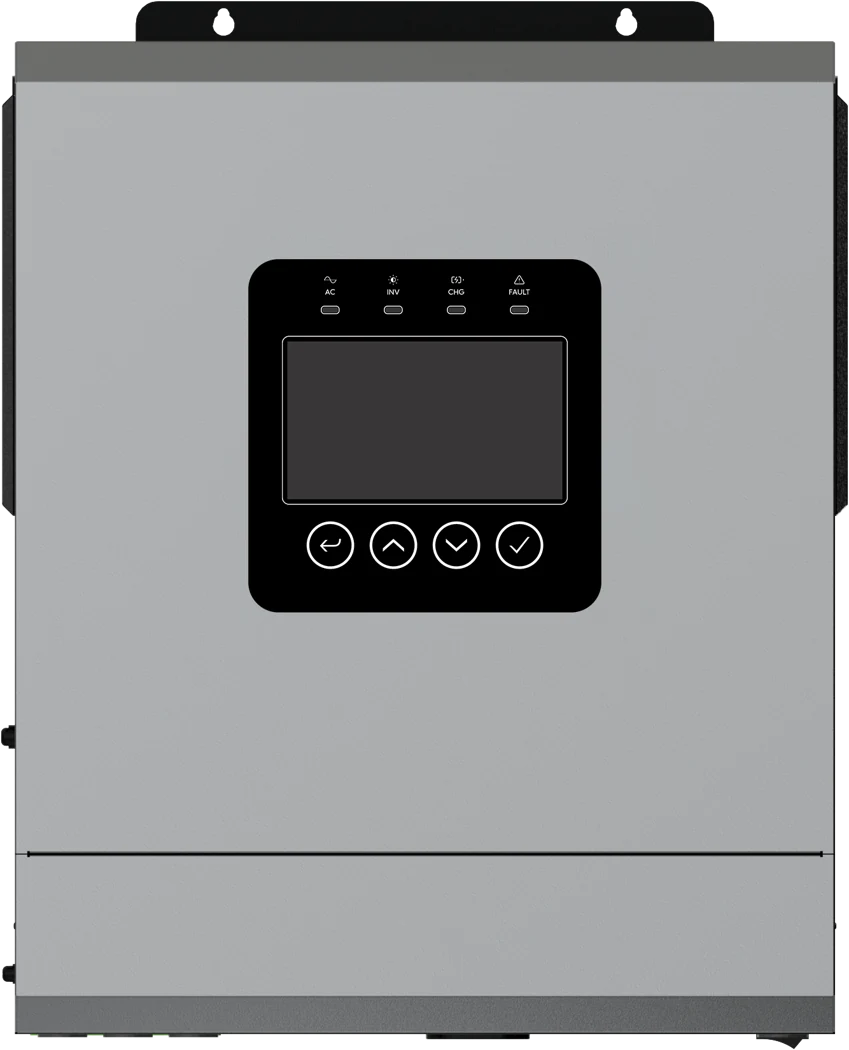
PV9000-24 S5.0 Solar Inverter
Solar Inverters & Solar Pump Drives
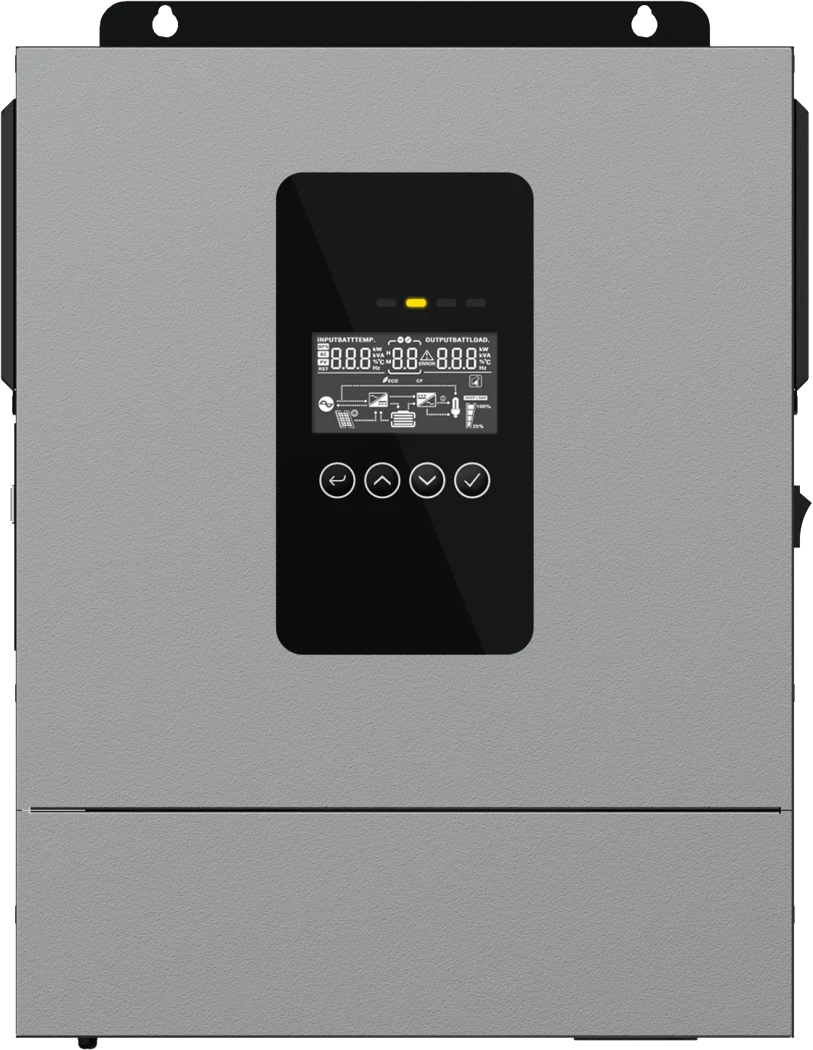
PV3000-12 S2.0 Solar Inverter
Solar Inverters & Solar Pump Drives