

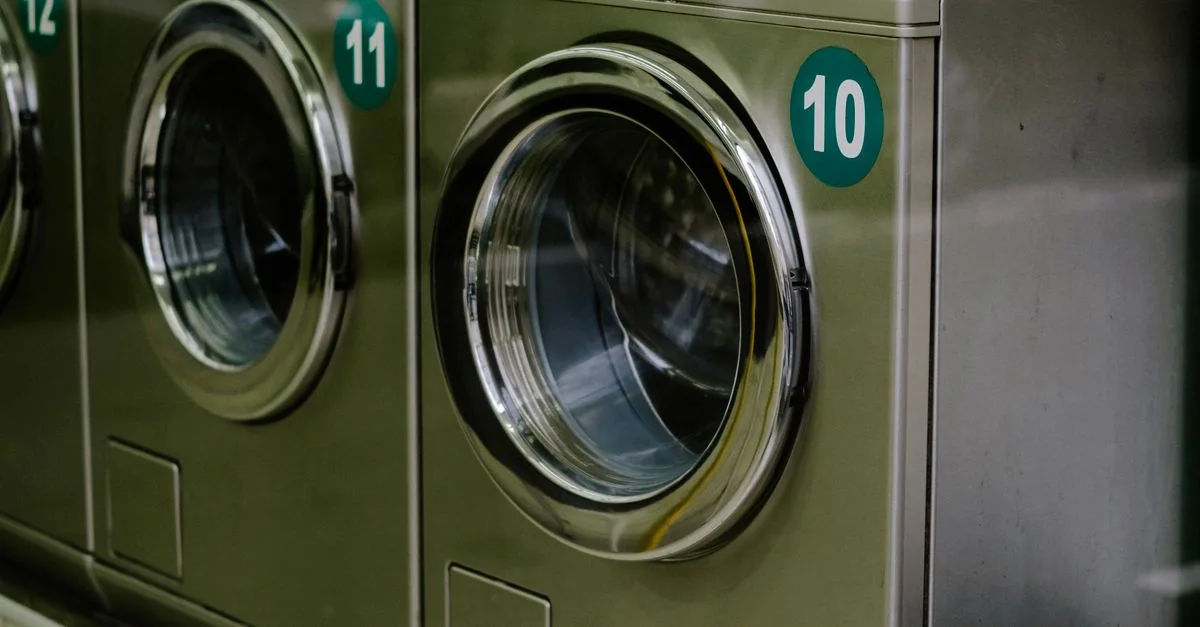
Industrial washing & cyclic motor duty
Wash, drain and extraction stages impose different speed and inertia demands. A general drive selection cannot substitute for a verified washing-machine control program.
Load characteristics & existing operating problems
Industrial washers have different duties during low-speed washing, distribution and high-speed extraction. Wet-load distribution changes imbalance and inertia. Frequent reversing and rapid deceleration can create current or DC-link energy issues; maximum frequency alone is not a selection criterion. Establish drum, bearing, door-lock and imbalance-system condition before assessing a drive replacement.
- Original machine controller and safety interlocks
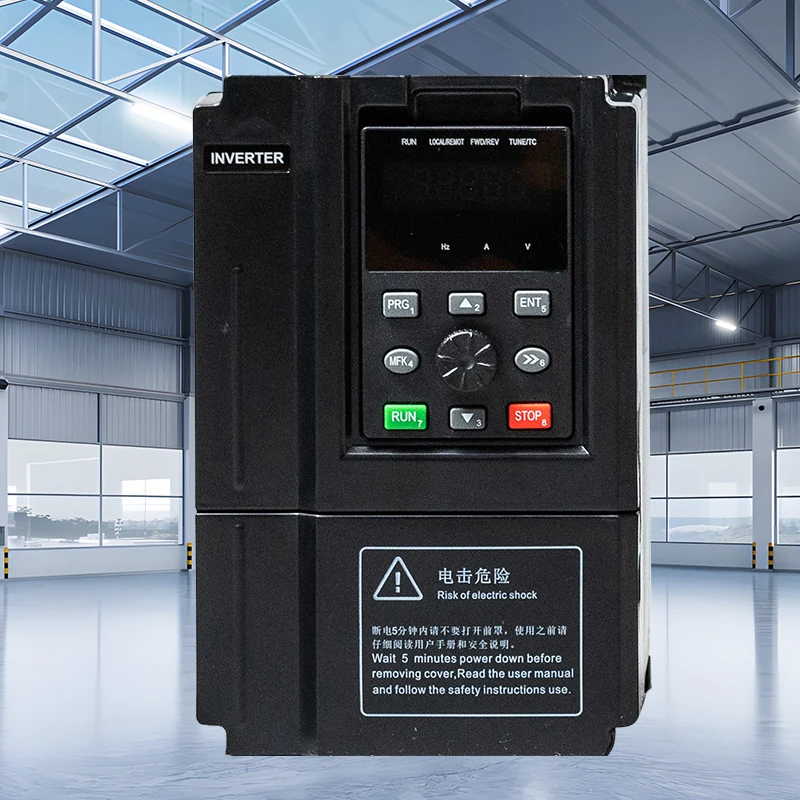 Hailing 750verified drive / motor
- drum mechanism
System composition & control sequence
The original washer controller retains fill/drain, door, distribution and extraction permissions. The drive executes verified speed and direction commands. Stage ramps, stops and braking depend on the machine process and actual drive specification, not another supplier’s frequency/time table. Abnormal-load slowdown or stopping is a machine-level strategy rather than an assumed general-drive program.
Selection inputs & control requirements
Obtain motor data, reversing cycle, drum inertia, acceleration/deceleration, braking duty and bearing speed limits. Check braking hardware and overload from the exact drive documentation.
| Data to collect | Why it matters | Reference |
|---|---|---|
| Motor and drum limits | Verify transmission ratio, maximum speed and low-speed cooling. | Machine/motor maker data; a0–400Hz drive range does not authorize extraction speed. |
| Wet load, inertia and reversal | Determine ramp, repeated-duty and current requirements. | Machine process records and mechanical data required. |
| Deceleration energy and braking | Avoid unsuitable deceleration causing overvoltage or inadequate stopping. | Verify ordered 750/3000 specifications; a braking unit is not assumed. |
| Door, imbalance and commands | Preserve stage permissions, abnormal stopping and restart logic. | Original machine safety/control system; a general drive does not replace its certification. |
Capability and safety boundaries
Door locks, imbalance detection and overspeed protection must remain machine-level safety functions. No extraction-speed, torque or cycle-time guarantee is inferred from a general drive listing.
Application scenario / design example
APPLICATION SCENARIO / SELECTION EXAMPLEAssume a washer needs a drive replacement while retaining its controller and safety circuits. Obtain motor, drum and original braking data and assess the candidate against actual wash/extraction duty. The controller continues issuing stage permissions and speed/direction commands; replacement proceeds only after interface and braking verification. Progress trials from unloaded to approved wet loads, checking vibration and stopping at each stage. Reaching high frequency once without load does not establish extraction performance or whole-machine safety acceptance.
Commissioning & acceptance checks
With the equipment manufacturer, verify reversing, controlled stopping, imbalance response and door-lock protection before production.
- Preserve programs, parameters and wiring, inspect door locks, drum and bearings, and use the machine-maker procedure for controlled unloaded direction/speed checks.
- With approved loads, observe wash reversals, distribution and extraction, logging current, vibration and temperature. Stop and diagnose abnormal vibration rather than simply increasing drive size.
- With the machine manufacturer, safely verify door permissions, imbalance handling and stopping, confirming that unlock and recovery conditions remain intact.
Assessing energy and operating value
Compare full-cycle electricity for equivalent textile, dry mass, wash quality and post-extraction moisture, also recording water and heating energy. State the boundary if only the motor circuit is metered. Reduced required washing or poorer extraction is not an energy saving at equivalent service.
Product selection & documents
Start with these product families, then match the exact motor, supply, control interface and operating duty.
HL750 Series Frequency Inverters
Industrial Motor Drives
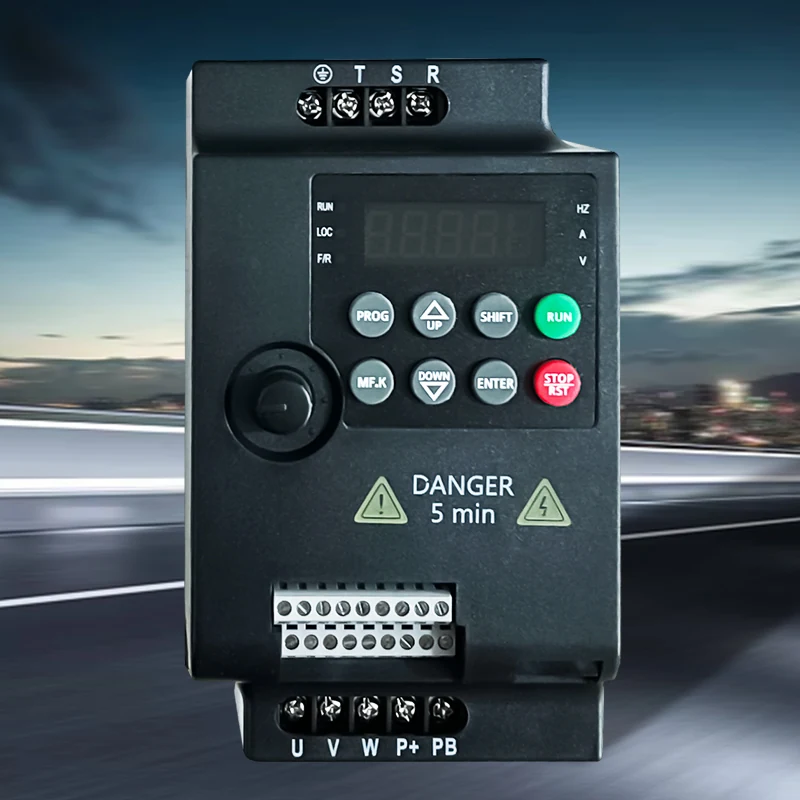
3000 Series Frequency Inverters
Industrial Motor Drives
General motor-control references
High-performance vector drive — general reference manual
Technical reference: match the equipment manual and control-firmware revision before applying terminal or parameter identifiers.
Permanent-magnet motor wiring & parameter setup note
Technical reference: match the equipment manual and control-firmware revision before applying terminal or parameter identifiers.