

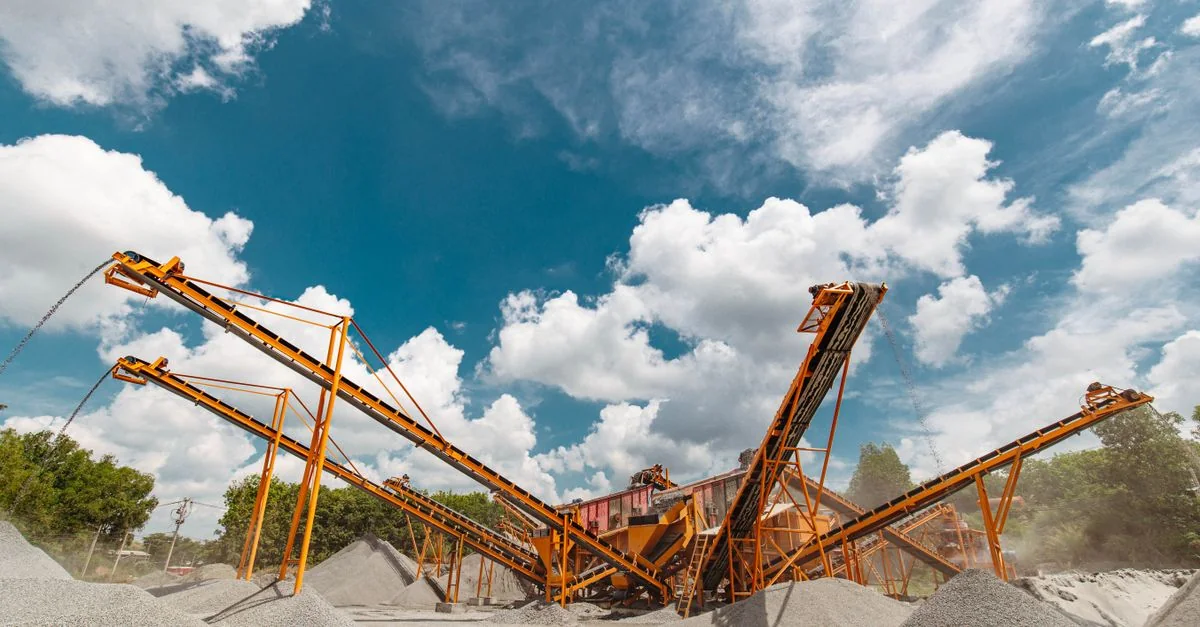
Mineral & building-material auxiliaries
Mineral and building-material sites combine abrasive dust, heavy starting and variable-demand auxiliaries. Separate ordinary auxiliary drives from hazardous or safety-critical equipment.
Load characteristics & existing operating problems
Surface mineral/building-material plants can combine extraction, feeding and conveying loads. Dust impairs cooling, while heavy material starts increase current and transmission shock. Mills and crushers differ markedly from ordinary auxiliaries in inertia and torque; a shared industry label does not justify the same drive. Separate safe-area auxiliaries from principal machines requiring their own technical study.
- Plant permissives
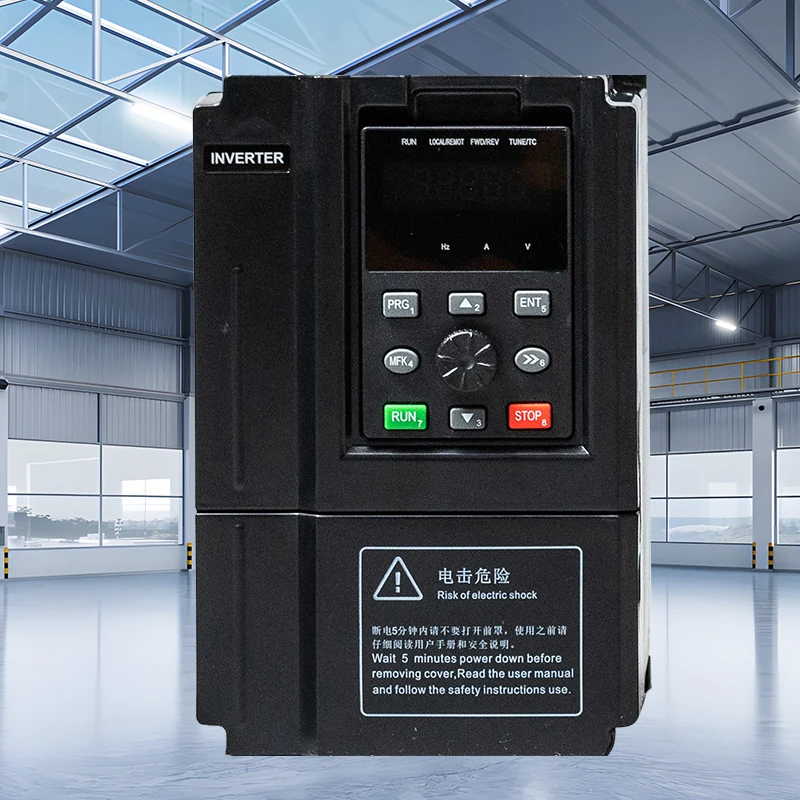 Hailing 750engineered cabinet and verified drive
- auxiliary fan, feeder or surface conveyor
System composition & control sequence
Plant controls coordinate extraction, downstream readiness and feed permissions, while candidate drives operate within verified speed ranges. Process and worker-protection design determine whether inadequate extraction restricts feeding. Design filtration, heat removal and access together; a closed enclosure is not an explosion-proof or universal dust-area approval.
Selection inputs & control requirements
Assess torque/inertia, dust loading, cooling, altitude, ambient temperature and power quality. HL680 panel descriptions do not establish a numerical IP rating; confirm the ordered enclosure.
| Data to collect | Why it matters | Reference |
|---|---|---|
| Material load and duty | Separate ordinary feeding, loaded conveying and high-inertia principal machinery. | Mechanical data and site records, not industry-label inference. |
| Starting torque and current | Check actual margin for loaded starts and repeated duty. | Verify ordered 750/3000 specifications; do not invent overload multiples. |
| Cabinet cooling and dust zone | Address blocked filters, condensation and incorrect selection for hazardous dust. | Confirm the IP and explosion-protection requirements for HL680 with our team. |
| Ambient, altitude and supply | Establish installation/derating requirements and supply variation. | Site measurements and exact-model documents; do not transfer another maker’s derating rules. |
Capability and safety boundaries
No underground mining, explosion-proof, medium-voltage, hoist or mill-starting capability is asserted. Such duties need a separate documented technical proposal.
Application scenario / design example
APPLICATION SCENARIO / SELECTION EXAMPLEAssume a surface materials workshop wants demand-following feeding while maintaining extraction. First confirm a non-hazardous installation zone and obtain load, starting-duty and motor data. Controls permit feeding only when extraction and downstream readiness are established; a candidate drive provides verified speed control. Trials assess loaded current, accumulation and cabinet temperature. A later request for a mill or underground installation requires a new dedicated selection rather than extending this auxiliary concept into an unproven Hailing capability.
Commissioning & acceptance checks
Check loaded current, cabinet temperature, filter maintenance interval, vibration and upstream/downstream shutdown interlocks.
- Inspect free movement, accumulated material, guards and dust segregation; confirm the installation zone before checking earthing and permissions.
- Progress from unloaded to agreed working duty while logging speed, current, vibration and cabinet temperature, checking maintainable cooling under representative dust conditions.
- Verify extraction permissions, upstream/downstream stops and jam recovery. Recheck temperatures and maintenance intervals after thermal stabilization; principal machines and hazardous zones require separate acceptance.
Assessing energy and operating value
Compare auxiliary electricity for equivalent material, required grading, transport distance and useful output, recording idle and extraction duty. Track dust and filter-maintenance changes separately. Lower power obtained by inadequate extraction is not an effective improvement, and other brands’ mining savings are not evidence for this design.
Product selection & documents
Start with these product families, then match the exact motor, supply, control interface and operating duty.
HL750 Series Frequency Inverters
Industrial Motor Drives
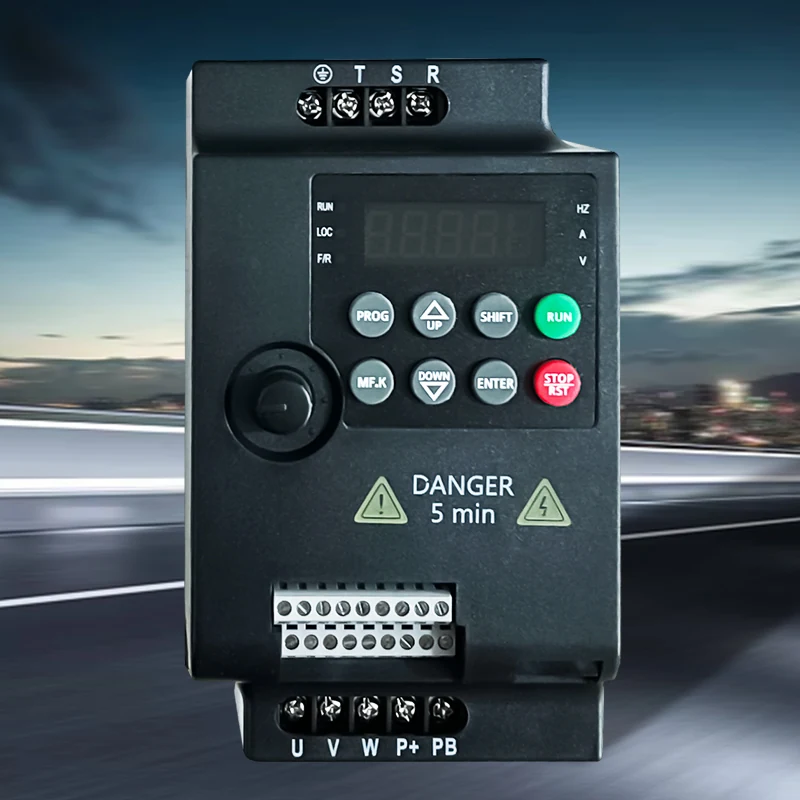
3000 Series Frequency Inverters
Industrial Motor Drives
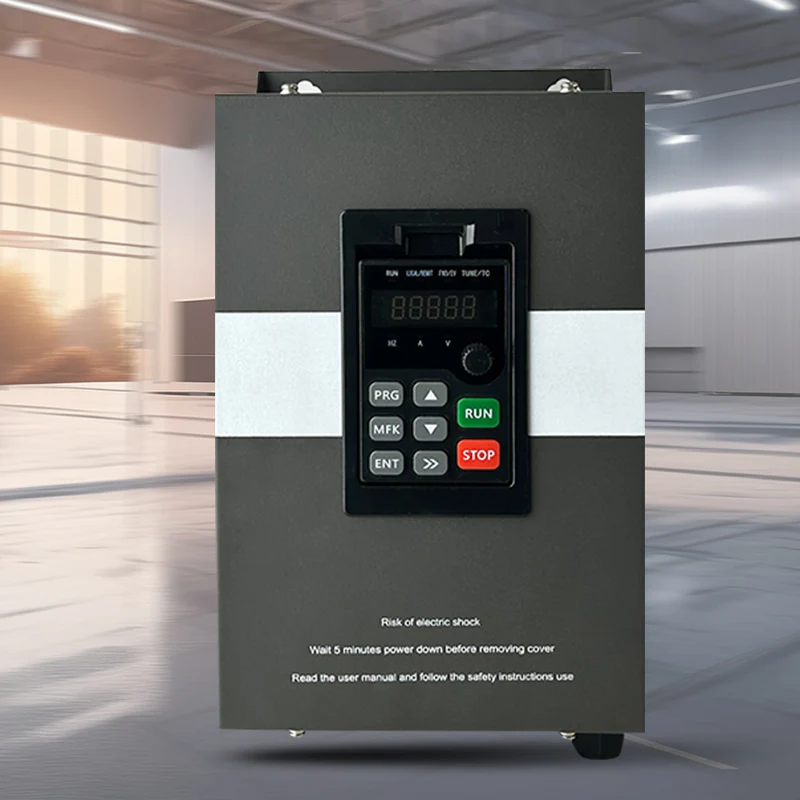
680 Series Protective-Enclosure Drives
Industrial Motor Drives
General motor-control references
High-performance vector drive — general reference manual
Technical reference: match the equipment manual and control-firmware revision before applying terminal or parameter identifiers.
Permanent-magnet motor wiring & parameter setup note
Technical reference: match the equipment manual and control-firmware revision before applying terminal or parameter identifiers.