

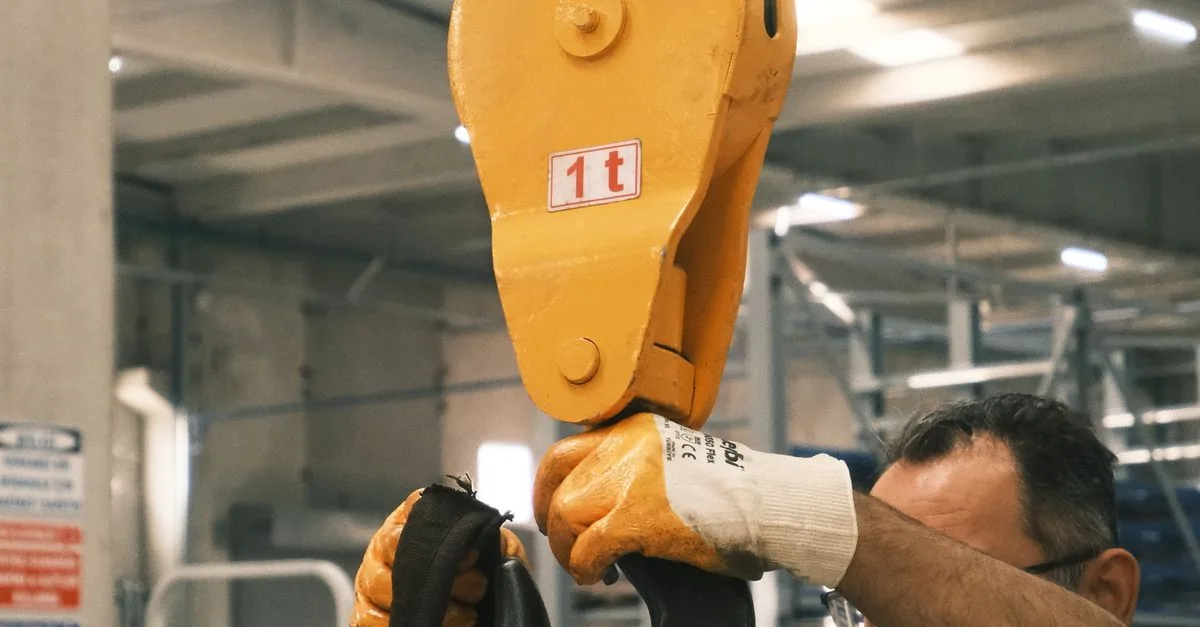
Cranes, hoists & lifting
Lifting motions need controlled acceleration, holding torque and a defined stop. Mechanical brakes remain part of the safety chain.
Load characteristics & existing operating problems
Hoisting returns energy during deceleration and lowering; travel and hoist duties differ. Applying a pump-or-fan light-duty setting to a hoist is a common mistake.
- Hoist or travel motor
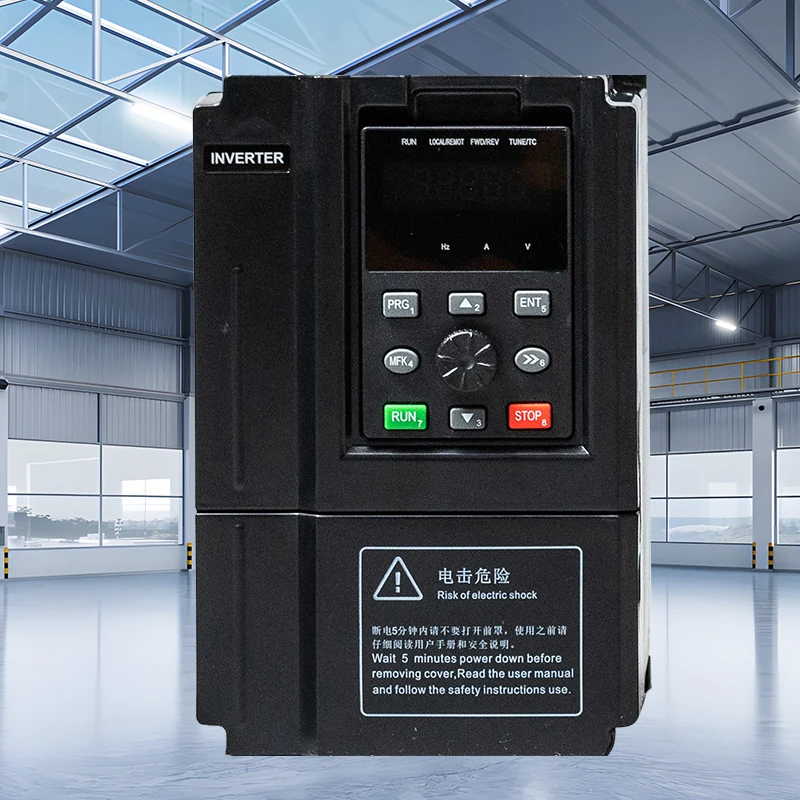 Hailing 750drive
- gearbox and drum or wheel
A mechanical brake, limit switches and an operator or PLC command path
System composition & control sequence
Drive deceleration does not replace a mechanical brake. Limits, slack-rope, overload and emergency stop belong on the safety chain, and brake release/apply timing must be verified during commissioning.
Selection inputs & control requirements
750 and 3000 are general-purpose industrial candidates.
| Data to collect | Why it matters | Reference |
|---|---|---|
| Duty and current | Record load, speed, cycles per hour and motor current. | Mechanical and nameplate data. |
| Braking | Estimate resistor power with the general formulas in the selection guide and confirm whether a braking unit is required. | General vector-drive manual, chapter 6. |
| Safety devices | Limits, brake, overload and emergency stop must be in the acceptance test. | Lifting safety procedure. |
Capability and safety boundaries
This is not a crane-control package and does not replace mechanical brakes, overload devices or statutory lifting inspections. Do not copy placeholder XXX braking tables from the general manual onto 750 or 3000.
Application scenario / design example
APPLICATION SCENARIO / SELECTION EXAMPLEIf the DC bus rises during lowering, first check that the mechanical brake applies on time, then estimate the resistor with the general formulas U×U/R=Pb and 0.7×Pr=Pb×D rather than copying the manual’s XXX model table.
Commissioning & acceptance checks
Test slow-speed approach, upper/lower limits, brake timing, emergency stop and a measured stop under a known test load.
- Confirm rotation, limits and brake timing with no load.
- Test hoist, lower and stop with a known test load.
- Record braking-resistor temperature rise and emergency-stop behavior.
Assessing energy and operating value
Account energy by cycles and load mass; do not automatically count regenerated energy as a saving.
Product selection & documents
Start with these product families, then match the exact motor, supply, control interface and operating duty.
HL750 Series Frequency Inverters
Industrial Motor Drives
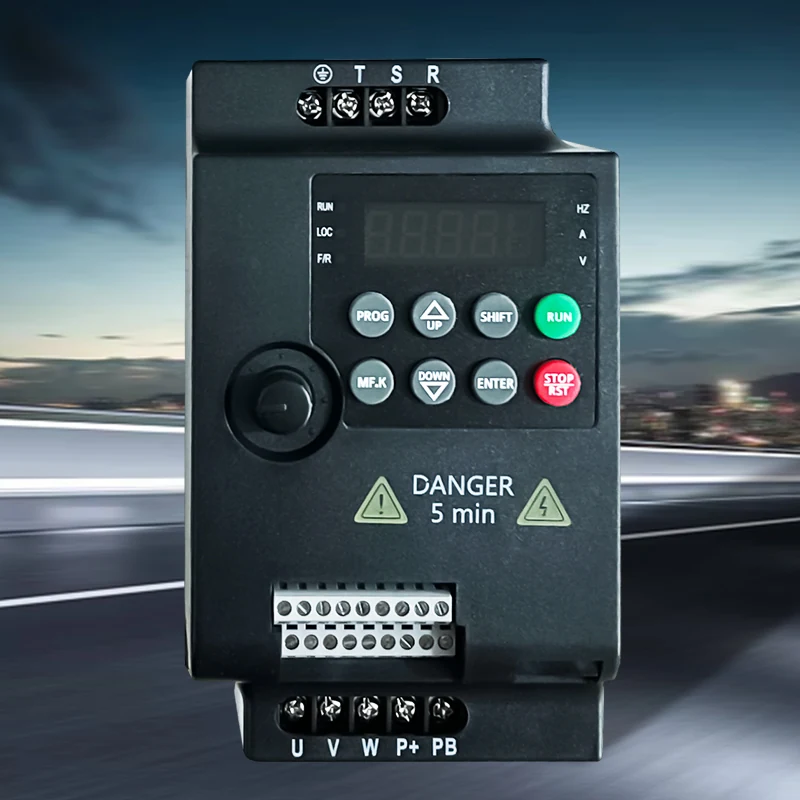
3000 Series Frequency Inverters
Industrial Motor Drives
General motor-control references
High-performance vector drive — general reference manual
Technical reference: match the equipment manual and control-firmware revision before applying terminal or parameter identifiers.
Permanent-magnet motor wiring & parameter setup note
Technical reference: match the equipment manual and control-firmware revision before applying terminal or parameter identifiers.