

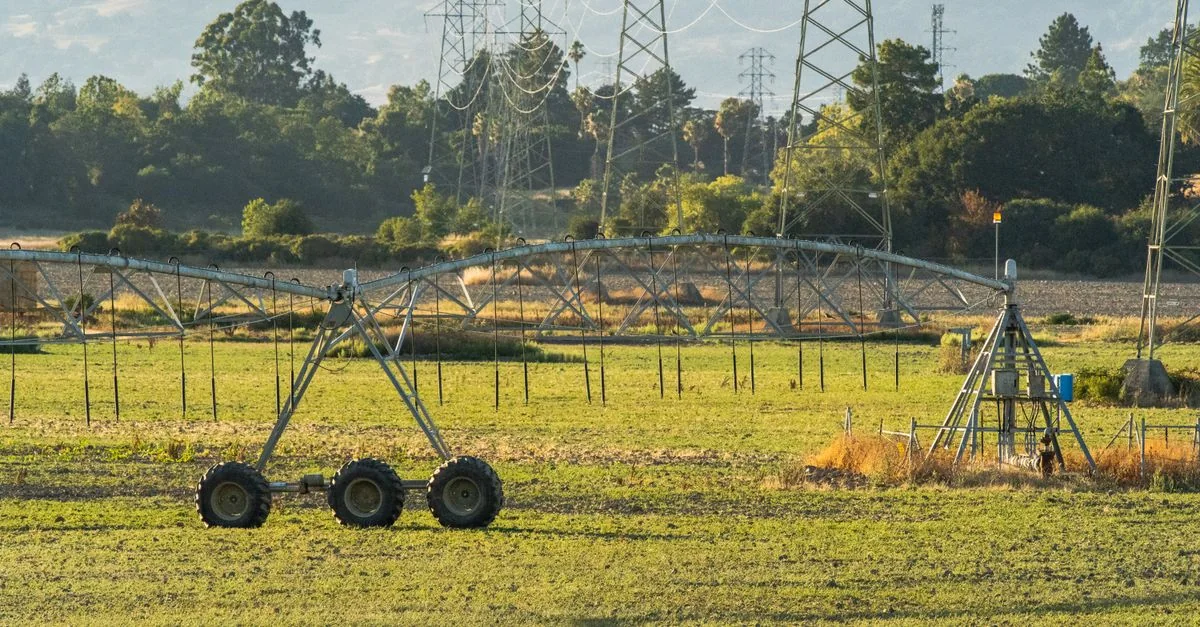
Solar irrigation & water storage
Pump delivery changes with sunlight and total head. Size the system for daily water demand rather than inverter power alone.
Load characteristics & existing operating problems
A borehole pump must overcome the pumping water level and pipe losses, not merely the static well depth. Available solar power is greater around midday; morning and evening operation may not reach a useful delivery speed. Excessive instantaneous extraction can also depress the water level. Align irrigation timing, usable tank capacity and the source recovery rate in a single water-demand plan.
- PV array
- protected DC input
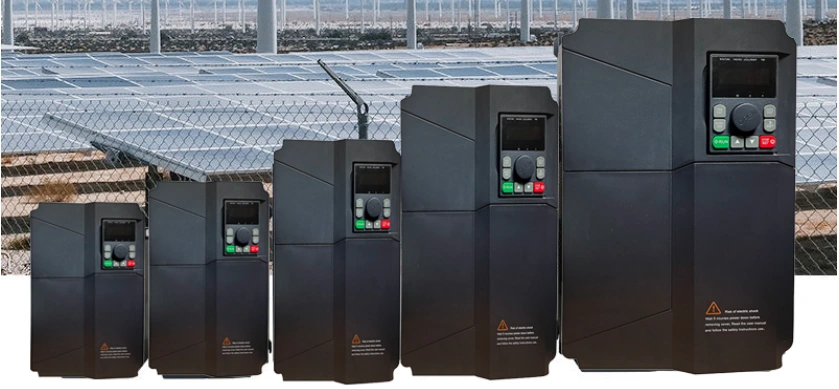 HAILINGHL710
- compatible three-phase asynchronous pump
- storage tank
System composition & control sequence
The controller drives the pump within its permitted PV-input envelope, while water storage buffers the mismatch between sunshine and demand. Define the priority of low source level, tank-full signal, manual stop and supply recovery. Confirm sensor types, terminal connections and reset behavior against the supplied controller documentation. Add AC backup only where the ordered configuration supports it and its isolation arrangement has been approved.
Selection inputs & control requirements
Obtain seasonal water demand, static and dynamic water levels, pipe losses and the pump curve. Check cold-weather string Voc, operating MPPT voltage, rated motor current and any optional AC supply against the exact GT2/GT4 model.
| Data to collect | Why it matters | Reference |
|---|---|---|
| Water demand and storage | Establish the daily delivery target and the deficit during non-solar hours instead of simply selecting a larger motor. | Site measurement and owner demand schedule; not an inverter rating. |
| Total head and pump curve | Combine pumping level, elevation and friction losses to locate the actual operating point. | Pump-manufacturer curve and site pipe data required. |
| Cold Voc and operating string voltage | Cold conditions must not exceed the DC ceiling; hot operating voltage must remain in the relevant MPPT range. | HL710 catalog p2, model-specific GT2/GT4 table. |
| Motor current and protection signals | Equal motor power does not ensure equal current; define low-water and tank-full protection logic. | HL710 model table and pump nameplate; actual sensor interfaces require confirmation. |
Capability and safety boundaries
Dry-run protection does not replace well-level assessment. Never connect PV and AC by improvised switching; the supplied controller configuration and approved isolation arrangement must be confirmed.
Application scenario / design example
APPLICATION SCENARIO / SELECTION EXAMPLEAssume a farm irrigates mainly at night but can store water during the day. The engineer obtains daily demand, dry-season pumping level and usable tank capacity, then checks the worst head against the pump curve. PV strings and motor current are checked against a specific HL710 model. The operating concept fills the tank when sunlight and water availability permit, stops at full level and protects against inadequate source water. Trial acceptance is based on planned daily delivery without over-extraction, not on treating controller power as a flow guarantee.
Commissioning & acceptance checks
Check priming, direction, dry-run response, tank-full stopping, restart behavior and daily water volume under recorded irradiance.
- Complete mechanical, insulation and earthing checks first. Qualified personnel then verify wiring and direction using the equipment procedure; do not test direction by prolonged dry running.
- At different available irradiance levels, record PV voltage, motor current, pumping level, flow and head. Verify protection and manual reset, and inspect reverse flow and check-valve behavior after stopping.
- Observe a representative operating period and reconcile tank inflow with well recovery. If delivery is low, investigate head, PV strings and pump operating point rather than raising the frequency ceiling.
Assessing energy and operating value
Use metered useful water delivery as the denominator and separately record solar pumping, AC-backup pumping and downtime, together with head and weather. A diesel or grid comparison must include the baseline fuel or electricity needed for the same water duty. Solar generation is not automatically equal to whole-project energy savings.
Product selection & documents
Start with these product families, then match the exact motor, supply, control interface and operating duty.