


Elevators & vertical transport
Vertical transport demands smooth starting, accurate stopping and a holding brake. Statutory lift rules apply in addition to any drive discussion.

Load characteristics & existing operating problems
Lifts start and stop often, with clear deceleration and regeneration. Leveling accuracy depends on the machine, encoder and brake. Pump-or-fan parameters do not apply.
- Traction or other hoist motor
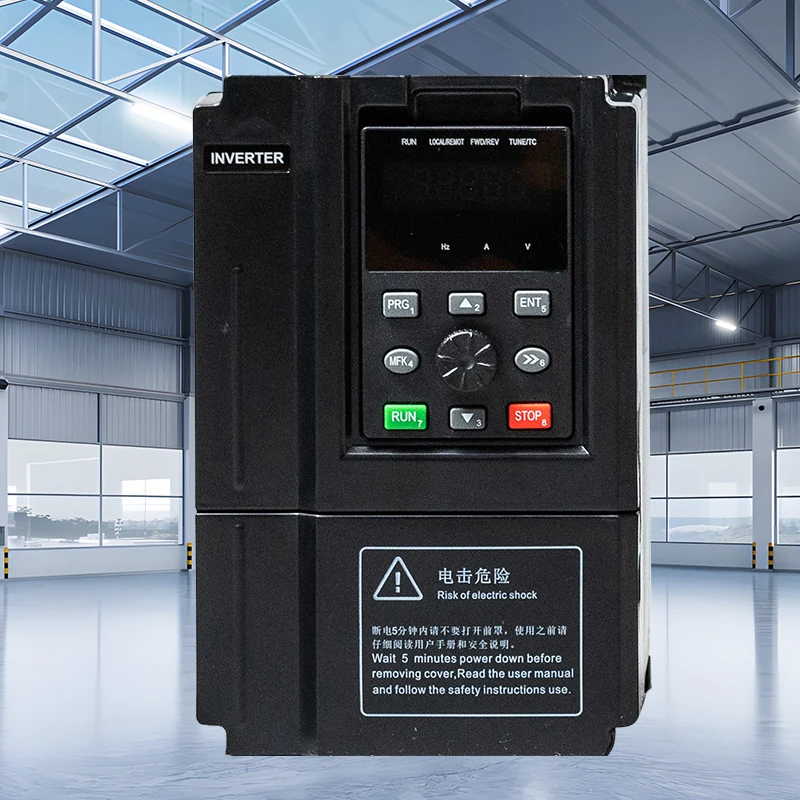 Hailing 750drive
- gearbox or machine
A mechanical brake, door and landing interlocks, and a lift controller
System composition & control sequence
The drive must follow the lift controller and safety chain and must not bypass door locks or emergency stop. Brake release versus torque build-up needs a dedicated check.
Selection inputs & control requirements
750 and 3000 are general-purpose industrial candidates only.
| Data to collect | Why it matters | Reference |
|---|---|---|
| Regulatory fit | First confirm whether a standard industrial drive is admissible for the installation. | Local lift regulations. |
| Brake and leveling | Check the mechanical brake, deceleration and leveling requirement. | Lift-control description and general braking formulas. |
| Interfaces | Define encoder, door-lock and controller terminals. | Supplied documents and control drawings. |
Capability and safety boundaries
Do not use this page to specify a passenger or goods lift in a regulated market.
Application scenario / design example
APPLICATION SCENARIO / SELECTION EXAMPLEIf the project is a certified passenger lift, stop proposing 750 / 3000 and follow a lift system that meets the local directive. Only after a standard industrial drive is confirmed admissible for a goods hoist should current and braking estimates proceed.
Commissioning & acceptance checks
Commissioning, if a standard industrial drive is permitted, must include brake timing, leveling, door interlocks and emergency stop under the applicable lift procedure.
- Where regulations allow, confirm rotation, brake and door locks at no load.
- Check leveling and emergency stop with a test load.
- Record regenerative behavior and resistor temperature if a resistor is used.
Assessing energy and operating value
Account energy by trips and load, and note whether a regenerative unit is fitted.
Product selection & documents
Start with these product families, then match the exact motor, supply, control interface and operating duty.
HL750 Series Frequency Inverters
Industrial Motor Drives
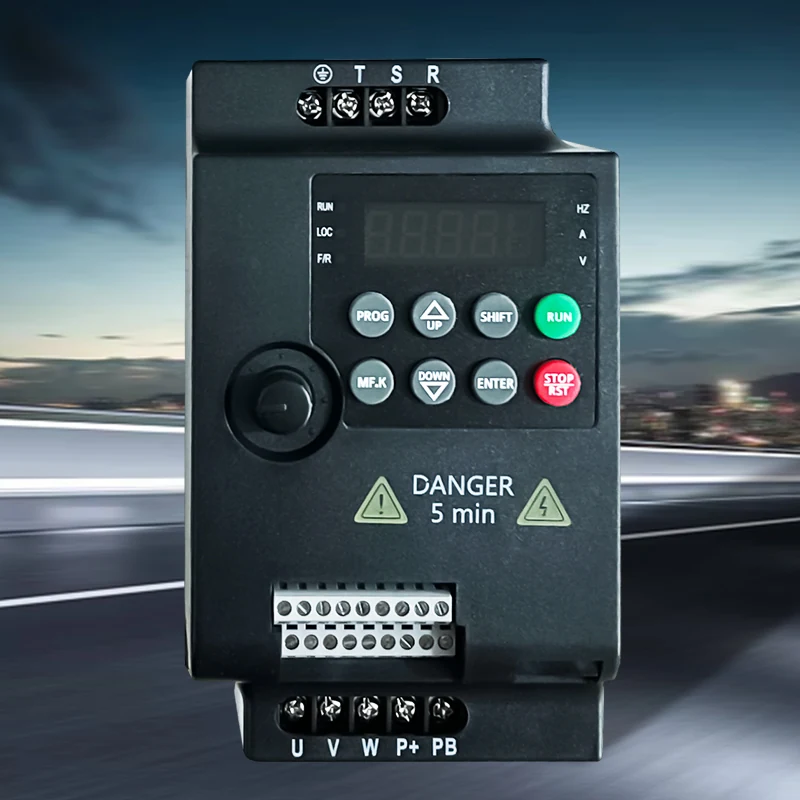
3000 Series Frequency Inverters
Industrial Motor Drives
General motor-control references
High-performance vector drive — general reference manual
Technical reference: match the equipment manual and control-firmware revision before applying terminal or parameter identifiers.
Permanent-magnet motor wiring & parameter setup note
Technical reference: match the equipment manual and control-firmware revision before applying terminal or parameter identifiers.