
Braking resistor selection: resistance, power and braking duty
How to size a braking resistor and braking unit for a frequency inverter using U²/R = Pb and 0.7 × Pr = Pb × D, with typical braking duty values and a worked example.

When a motor decelerates a high-inertia load, or when the load drives the motor (hoists, lifts, unwinders), energy flows back into the drive's DC bus. Without a path to dissipate it, the drive trips on overvoltage (Err05–Err07). A braking unit and braking resistor convert this energy into heat.
1. Resistance
During braking, almost all regenerated energy is dissipated in the resistor:
U × U / R = Pb
U is the DC-bus braking voltage at which the system brakes stably (for a 380 V AC system it is generally 700 V) and Pb is the braking power. A lower resistance gives more braking power, but the resistance must never be lower than the minimum value specified for the drive model.
2. Resistor power
In theory the resistor power equals the braking power, but a 70% derating factor is applied:
0.7 × Pr = Pb × D
Pr is the resistor power and D is the braking duty, the share of the working cycle spent regenerating.
| Application | Typical braking duty D |
|---|---|
| Lift | 20–30% |
| Winding and unwinding | 20–30% |
| Centrifuge | 50–60% |
| Occasional braking | 5% |
| General applications | 10% |
Worked example
A 380 V system with U = 700 V and a 32 Ω resistor: Pb = 700 × 700 / 32 ≈ 15.3 kW. For general use with D = 10%: Pr = 15.3 × 0.10 / 0.7 ≈ 2.2 kW. Choose a resistor of at least 32 Ω (and not below the drive's minimum) rated about 2.2 kW or more.
Practical rules
- Higher system inertia, shorter deceleration time and more frequent braking all call for higher resistor power and lower resistance.
- The resistor power can be larger than calculated; the resistance must not be below the recommended minimum.
- Smaller drives usually have a built-in braking unit; larger ratings use an external braking unit, sometimes two or three units in parallel each with its own resistor.
- Mount resistors where their heat cannot damage cables or equipment.
The minimum resistance and recommended power for each drive rating are listed in the product manual. See also the selection guide.
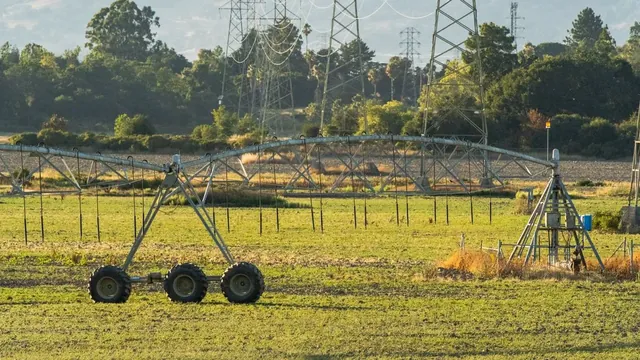
Solar pump inverter sizing: matching the PV array to the HL710 controller
How to choose an HL710 solar pump controller and PV array: array power of 1.2–1.6 times pump power, open-circuit voltage limits, MPPT range and when to go one size up.
Read more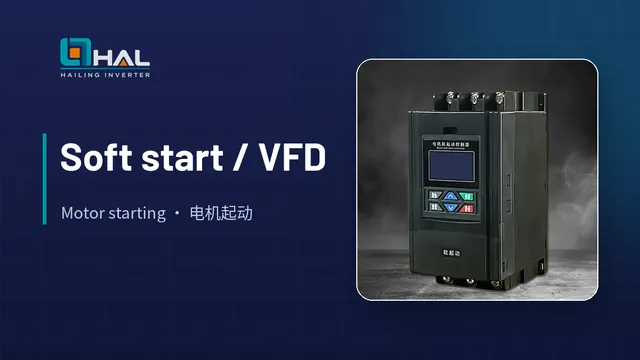
Soft starter or VFD? How to choose the right motor starting solution
Both limit starting current, but only a VFD controls speed. A comparison of soft starters and frequency inverters by starting behaviour, speed control, energy saving and typical applications.
Read more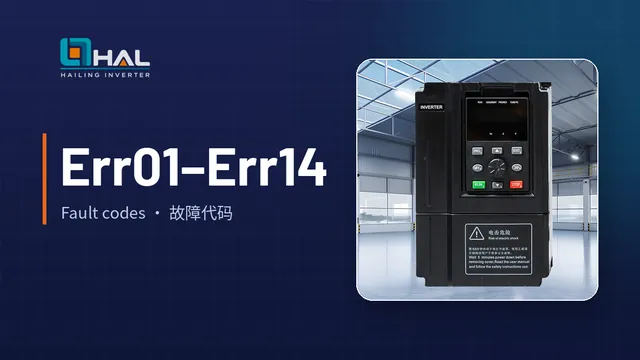
VFD fault codes explained: Err01 to Err14 and how to clear them
What each common Hailing vector-drive fault code means, the usual causes of overcurrent, overvoltage, undervoltage and overheating trips, and the checks to make before restarting.
Read more