
15 common questions about frequency inverters, answered
Frequency resolution, regenerative braking, stall prevention, mounting direction, running above 60 Hz, nuisance tripping and long storage: short answers to the questions users ask most.
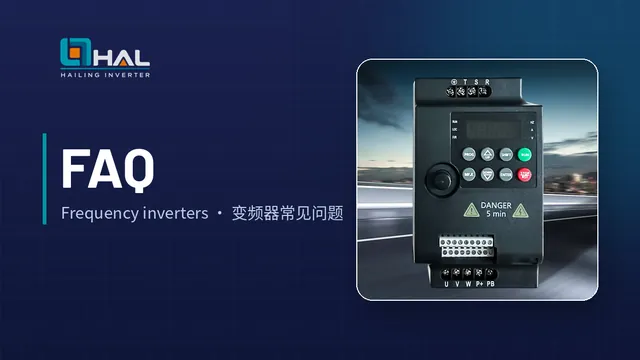
Drives combine power electronics and control, so questions come up in every project. These are the fifteen we hear most often, with short practical answers.
Questions and answers
1. What is frequency resolution and why does it matter?
In a digital drive the output frequency changes in small steps even when the reference is analogue. The smallest step is the frequency resolution, typically 0.015–0.5 Hz. With 0.5 Hz resolution, 23 Hz can only become 23.5 or 24 Hz, so the motor follows in steps. For continuous winding, a resolution around 0.015 Hz (below 1 r/min per step on a 4-pole motor) is adequate.
2. Why do some drives set acceleration and deceleration times separately?
Separate settings suit quick acceleration with slow deceleration, or small machine tools with a strict cycle time. For fans, where both times are long, a common setting is enough.
3. What is regenerative braking?
When the frequency reference is lowered while the motor is running, the motor runs as an asynchronous generator and acts as a brake. This is regenerative (electrical) braking.
4. Can I get more braking torque?
Regenerated energy is stored in the DC-bus capacitors. Limited by their capacity and voltage rating, a general-purpose drive provides about 10–20% of rated torque as regenerative braking. With an optional braking unit, 50–100% can be reached.
5. What protection functions does a drive have?
Two kinds: functions that correct an abnormal state automatically, such as overcurrent and overvoltage stall prevention; and functions that block the PWM signals and stop the motor, such as overcurrent trip, regenerative overvoltage trip, cooling-fan overheat and momentary power-loss protection.
6. Why does the drive trip when a load is connected through a clutch?
At the moment of engagement the motor moves from no load to a high-slip region. The large current trips the drive on overcurrent.
7. Why does a running drive stop when a large motor starts in the same plant?
The large motor's starting current causes a voltage drop in the shared transformer. Drives on the same transformer can see this as undervoltage or a momentary power loss and stop.
8. What does stall prevention mean?
If acceleration is set too short, the output frequency runs ahead of the motor speed and the drive trips on overcurrent. Stall prevention detects the current and slows the acceleration (or deceleration) so the motor keeps running.
9. Is the mounting direction restricted?
Yes. Cooling is designed around vertical airflow, so cabinet-mounted and wall-mounted drives should be installed vertically wherever possible.
10. Why does overvoltage usually appear when stopping?
Overvoltage alarms usually occur during stopping. The main causes are a deceleration time that is too short or a problem with the braking resistor or braking unit.
11. What if the drive reports overtemperature but the sensor is fine?
Check the drive fan and ventilation first. If the temperature sensor and cooling are confirmed normal, interference may be the cause; contact the manufacturer for the correct remedy.
12. Why does the drive trip on overcurrent so often?
Tripping as soon as it speeds up points to a load short circuit, a jammed mechanism, a damaged inverter module or insufficient motor torque. Tripping at power-on that cannot be reset points to a damaged module, driver circuit or current-sensing circuit. Tripping only during acceleration points to an acceleration time that is too short, a low current limit or a high torque boost (V/F).
13. Can I switch a motor straight onto a drive already at a fixed frequency?
Only at very low frequency. At a high reference it is like starting direct-on-line: a starting current of 6–7 times rated flows, the drive cuts off on overcurrent and the motor will not start.
14. What should I watch when running a motor above 60 Hz?
Make sure the machine can run safely at that speed (strength, noise, vibration); the motor enters its constant-power region, so check that torque is sufficient (fan and pump shaft power rises with the cube of speed); and consider bearing life.
15. What happens if a drive is not used for a long time?
The fan bearing lubricant dries out, high-voltage filter capacitors may bulge and low-voltage electrolytic capacitors may leak. Power stored drives periodically.
VFD fault codes explained: Err01 to Err14 and how to clear them
What each common Hailing vector-drive fault code means, the usual causes of overcurrent, overvoltage, undervoltage and overheating trips, and the checks to make before restarting.
Read more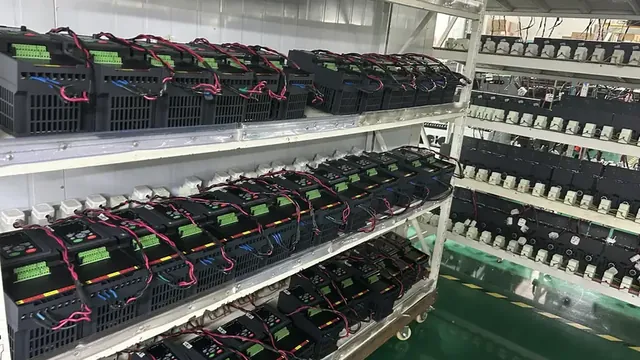
VFD maintenance checklist: daily checks, periodic inspection and wear parts
A practical maintenance plan for frequency inverters: what to check every day, what to inspect during shutdowns, when to replace fans and capacitors, and how to store spare drives.
Read more
Motor parameter auto-tuning: which method to choose and the step-by-step procedure
Dynamic, static or manual entry? How to choose the right motor auto-tuning method on a Hailing vector drive, the parameters to enter first, and what the drive calculates.
Read more